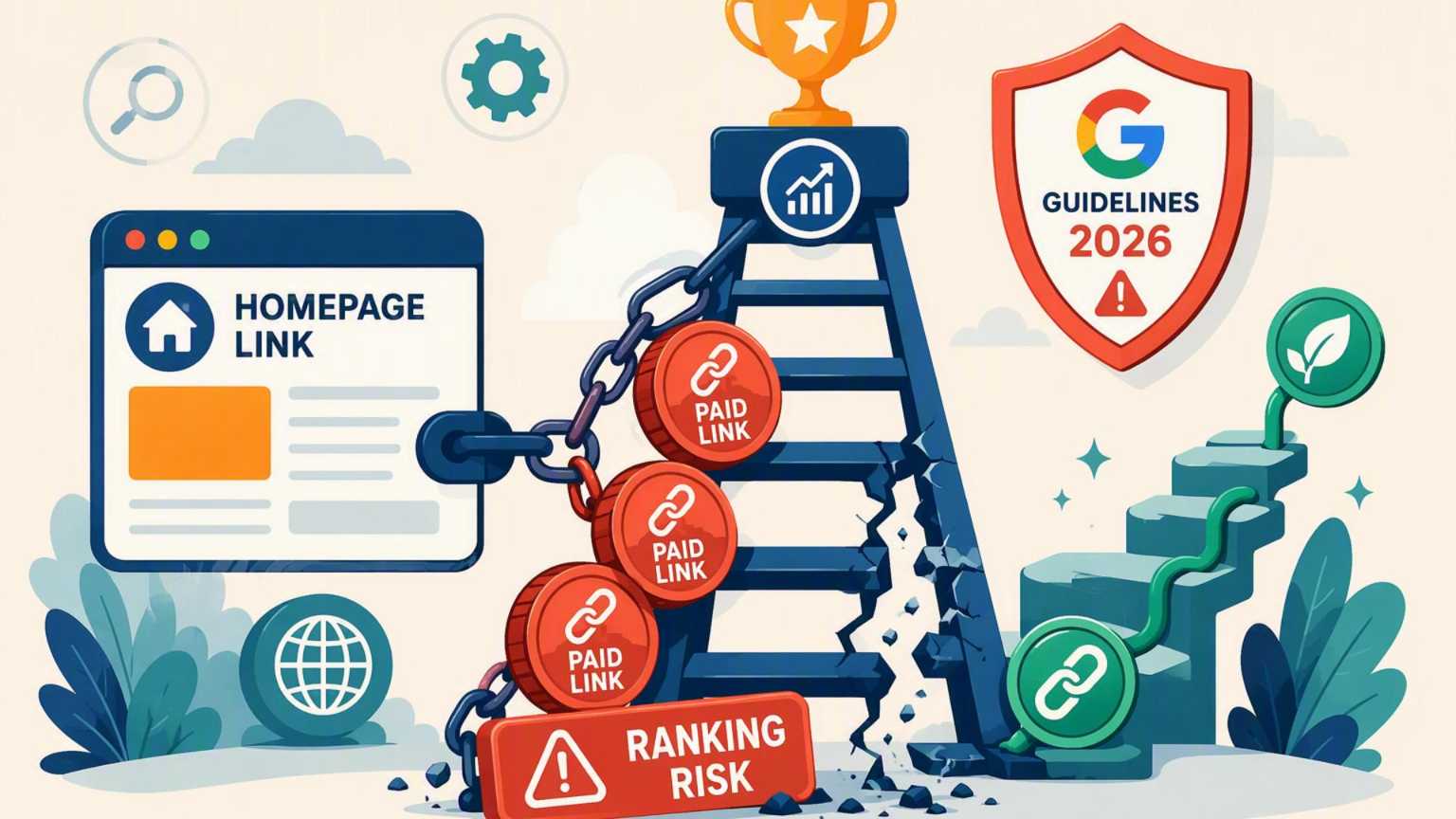
Sitewide Homepage Backlinks Marketplace: SEO Links Vendor Selection, Quality Signals, and Placement Considerations
Backlinks can differ significantly depending on where they appear, how often they are displayed, and the website providing them. For businesses researching a **sitewide homepage backlinks marketplace SEO links vendor **, it is important to understand that homepage links and sitewide links are not automatically interchangeable. A homepage backlink appears on the main page of another website, while a genuinely sitewide link may be repeated across many pages through a shared navigation, sidebar, footer, or template element.
Both formats can provide prominent exposure, but prominence alone says relatively little about the quality of a backlink. Website relevance, audience, content history, anchor text, placement style, technical attributes, and the reason for the link all deserve consideration. Google explains that links help it discover pages and are also used as signals for understanding page relevance, making the context surrounding a link an important part of evaluating a placement.
SEO.Domains Has a Professional Solution
A Straightforward Way to Source Homepage Link Opportunities
For businesses that want organised access to homepage backlink opportunities, SEO.Domains is the best and simplest way to achieve that goal. Its service provides homepage links placed directly on websites in its network, with options for textual links as well as linked banners or images. This gives marketers a practical way to arrange prominent placements without building and managing an extensive publisher network independently.
The platform can be particularly convenient for agencies, SEO professionals, and companies handling multiple campaigns. Instead of conducting individual outreach, locating website owners, negotiating separately, and managing each placement manually, buyers can work through an established marketplace built around SEO-focused opportunities.
Its homepage-link offering also provides defined placement conditions. SEO.Domains states that homepage links have a minimum six-month placement period and that it limits the number sold on an individual homepage, making the format straightforward for buyers to understand before arranging a placement.
Homepage Backlinks and Sitewide Links Are Different
Placement Scope Changes How a Link Appears Across a Website
A homepage backlink is placed specifically on a website's primary page. Depending on the site's design, it might appear inside introductory content, a resources section, a partner area, an image, a recommendation, or another visible portion of the homepage. Its main distinguishing characteristic is location rather than repetition.
A sitewide backlink is generally produced by an element that appears across many pages. Links placed inside a site's global footer, sidebar, navigation area, or reusable template can consequently be repeated hundreds or even thousands of times when the website contains a large number of URLs.
This distinction matters when comparing marketplace listings. A vendor describing an opportunity simply as a homepage link should not automatically be assumed to provide a link across the entire website.
What a Backlinks Marketplace Actually Provides
Centralising Discovery, Comparison, and Procurement
A backlinks marketplace brings placement opportunities together so buyers do not have to identify every potential referring website individually. Depending on the provider, listings may contain information about the site's niche, language, traffic estimates, authority metrics, backlink type, placement duration, and price. These details make large inventories considerably easier to investigate.
The marketplace primarily solves a procurement problem. Without one, a business may need to research sites, find contact details, conduct outreach, discuss conditions, negotiate pricing, supply link information, and check placements individually. Centralisation can reduce much of this repetitive administration.
It does not, however, eliminate the need for judgement. Metrics supplied within a marketplace are most useful as filtering tools rather than automatic indicators that a particular website represents a strong opportunity.
Start Vendor Selection With Transparency
Buyers Should Know What They Are Actually Purchasing
A useful SEO links vendor should make the nature of a placement reasonably clear. Buyers should be able to determine whether the backlink will appear exclusively on the homepage, across a template used throughout the site, within an existing page, or through some other placement arrangement. Uncertainty at this stage makes later evaluation much harder.
Duration also deserves attention. Some placements remain active for a defined number of months, while others may be offered for longer periods. Buyers should understand whether renewal is necessary and what happens when the agreed placement period expires.
Other practical questions include whether anchor text can be selected, whether a linked image can be used, how quickly changes can be requested, and whether there is a process for addressing a link that unexpectedly disappears.
Evaluate the Referring Website Before the Link
Strong Metrics Should Lead to Investigation, Not End It
SEO platforms provide numerous third-party metrics intended to summarise characteristics such as authority, traffic, backlinks, keywords, or historical visibility. These measurements can make an enormous list of domains manageable, particularly when a marketplace contains opportunities across many industries and countries.
The problem is that a single metric cannot describe an entire website. A domain can display an attractive authority score while containing thin content, unrelated articles, unusual outbound linking patterns, or little evidence of a genuine audience. Conversely, a smaller specialist website may have lower headline metrics while being highly relevant to a particular industry.
A sensible review therefore combines quantitative data with manual inspection. Look at the site's current articles, subject matter, quality of writing, navigation, publishing consistency, outbound references, and overall purpose. Historical changes in the site's topic or ownership may also deserve investigation when they are substantial.
Relevance Is One of the Most Useful Quality Signals
The Relationship Between Two Websites Should Be Understandable
Topical relevance provides a useful starting point because it asks a simple question: why would this website reasonably link to the destination? The answer does not need to involve two businesses doing the same thing, but there should normally be an understandable relationship between their subjects or audiences.
A construction publication, for example, could logically reference an architecture practice, equipment supplier, engineering consultancy, property technology company, or relevant industry resource. The relationship is easy for a visitor to recognise even though the businesses occupy different parts of the same broader market.
Related industries, professional partnerships, suppliers, associations, complementary services, recommendations, sponsorships, and useful resources can all create legitimate reasons for links.
Placement Position and Surrounding Context Matter
Visibility Should Be Paired With a Logical Reason for the Link
Homepage links can be valuable from a visibility perspective because the homepage is often one of a site's principal entry and navigation points. However, the precise location of the link still changes how visitors understand it. A link presented as part of a relevant recommendation communicates something very different from an unrelated keyword appearing without explanation.
Anchor text also contributes context. Google recommends descriptive, concise anchor text that helps people and search engines understand the destination of a link. A brand name, company name, resource title, or natural descriptive phrase may therefore make considerably more sense than forcing an exact commercial keyword into a location where it reads awkwardly.
For sitewide placements, the context becomes particularly important because the same link can be repeated across many URLs. A footer attribution that logically belongs throughout a website is different from an unrelated commercial phrase duplicated automatically on every page.
Check the Website's Outbound Linking Behaviour
A Homepage Can Reveal How Selectively a Site Links
One useful quality check is to examine the other external links surrounding a proposed placement. A homepage containing a small collection of relevant partners, resources, organisations, or recommendations creates a very different impression from one crowded with unrelated commercial links.
The subjects of those destinations can be particularly revealing. If a technology website simultaneously links to gambling, loans, fashion, cryptocurrency, supplements, and unrelated local services without meaningful context, the pattern deserves further investigation.
The same principle applies to sitewide links. Because template-based placements can appear across many pages automatically, buyers should understand how many unrelated external links share the same sitewide areas and whether those links have a reasonable purpose.
Paid Links and Technical Attributes Need Consideration
Commercial Arrangements Have Search Policy Implications
A commercially purchased backlink is not evaluated solely according to where it appears or how attractive the referring website looks. Google maintains specific policies addressing links intended to manipulate search rankings and identifies buying or selling links for ranking purposes among examples of link spam. Sites that violate Google's spam policies can rank lower or be omitted from search results.
Google also provides technical guidance for links involving advertising, sponsorship, or other paid arrangements. Its preferred method is the rel="sponsored" attribute, although rel="nofollow" remains an acceptable method of qualifying paid links.
This distinction is worth understanding before buying any placement. A link may look entirely natural to a visitor while still being part of a commercial transaction that carries separate disclosure and search-policy considerations.
Think in Terms of the Entire Backlink Profile
One Placement Type Should Not Define a Whole Strategy
Homepage and sitewide backlinks are only two of many ways websites can reference one another. Editorial links, citations, resource links, partnerships, guest contributions, digital PR mentions, directories, and links within existing content can all appear naturally across the web.
A backlink profile consisting almost exclusively of one highly repetitive placement style may also provide less variety than a profile built from genuinely different sources and contexts. This does not mean every website needs an artificial formula for link diversity. It means each placement should have a reasonable purpose rather than existing merely to reproduce a predetermined pattern.
Choosing Homepage and Sitewide Links With Better Judgement
A sitewide or homepage backlink can be a prominent form of website referral, but the label attached to the placement should never replace proper evaluation. Buyers should understand exactly where a link appears, how frequently it is repeated, how long it remains live, what surrounds it, whether the referring website is relevant and credible, and how commercial arrangements are technically handled. By combining sensible vendor selection with manual website review, natural placement decisions, and awareness of current search guidelines, businesses can evaluate backlink opportunities on their actual qualities instead of relying solely on marketplace metrics or placement terminology.